
A Joint Essay by Diana Susanti, Angga Bassoni Al Barkah, and Ayisha | Written originally in Malay-Riau (Bahasa), translated to English by Ayisha Abdul Basith | Updated on Januari 17 2026, adding “Land Redistribution and the Unresolved Tension” section and some minor formatting changes.
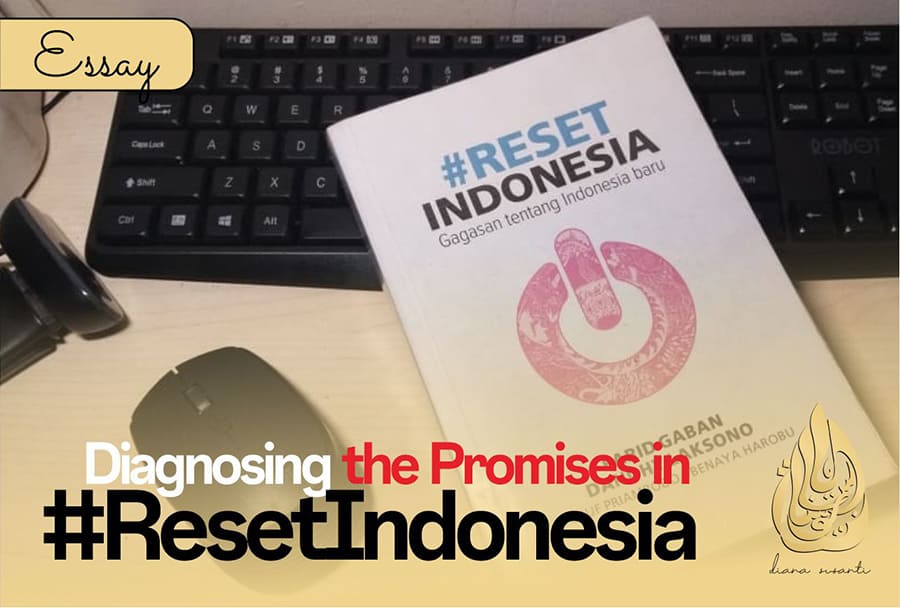
Wayanad, 15 January 2026 | It has been more than two months since our initial review of the book Reset Indonesia was published. Over that period, the text has continued to be revised and refined. From the outset, our position has remained relatively consistent: Reset Indonesia is a powerful work in its capacity as a diagnosis of the misdirection of development and the decay of the governing regime, yet it becomes problematic when read as a ready-made proposal for macro-level solutions. In its diagnostic function, the book deserves serious appreciation and careful reading.
As the conversation has evolved, however, the central problem no longer lies solely in the book’s content, but in the way it has been positioned and circulated within the public sphere. Reset Indonesia is increasingly treated not as a text to be tested and debated, but as a moral symbol and a marker of political identity. When criticism is frozen into slogans and critical reading is replaced by the repetition of narrative, the space for discussion paradoxically narrows. It is at this point that we consider a more rigorous, unsentimental follow-up reading to be necessary.
The dispersal of a discussion on Reset Indonesia in Madiun on 20 December 2025 made this shift unmistakably clear. The book no longer appeared merely as an object of reading, but as a politically sensitive marker, entangled with questions of security. This situation gives rise to a paradox: state repression amplifies the book’s moral aura while simultaneously shielding it from the kind of intellectual testing that should accompany it. This follow-up review is written within that context—not to diminish the book’s importance, but to return it to the terrain of critical reading.
Basic Book Information
- Title: #Reset Indonesia: Gagasan tentang Indonesia Baru
- Authors: Farid Gaban, Dandhy Dwi Laksono, Yusuf Priambodo, Benaya Harobu
- Publisher: Komunitas Bambu / Patjar Merah (Indonesia Terra) / Koperasi Indonesia Baru (2025)
- ISBN: 978-979-775-347-4
- Edition: First Regular Printing, September 2025
- Genre: Nonfiction; socio-political essays; journalism
- Structure: Prologue + 6 chapters + Epilogue
- Length: xii + 448 pages
Background of the Follow-Up Essay
After revising our initial review, we initially felt that our position on this book had been stated with sufficient clarity. The subsequent dynamics of discourse surrounding Reset Indonesia, however, compelled us to go further. A range of events labeled as book “dissections” or “discussions” revealed a recurring pattern: the book was often discussed by audiences who had not read it, and these forums functioned more as sites of narrative transmission than as spaces for testing ideas. Under such conditions, words lose their analytical weight and are reduced to instruments of affirmation.
In response to this situation, at the end of November we formed a temporary reading group to examine Reset Indonesia collectively and intensively. The reading process was conducted slowly and in layers, continually linked to empirical experience and to supporting literature. The aim was not to hunt for errors, but to test the extent to which the ideas proposed in the book could withstand confrontation with Indonesia’s concrete socio-political realities.
Through this process, we found that many of the book’s proposed solutions function effectively as ethical horizons and catalysts for imagination, yet become fragile when positioned as designs for structural change. It is this tension that led us to compose the present follow-up review: not to negate the book’s value, but to explain more systematically why it is strong as critique, yet unstable as a claim of “reset.”
Scope and Limitations
This follow-up review deliberately concentrates on the proposed solutions and the normative assumptions embedded in Reset Indonesia. We do not examine in detail certain issues such as the role of the military or Global South solidarity, not because these issues lack importance, but because they require analytical frameworks that exceed the scope of this essay.
Our reading is also grounded primarily in experiences of rural and peripheral regions. For that reason, several urban-oriented solutions proposed in the book are not discussed in depth. Urban questions involve population scale, social anonymity, complex power relations, and land-centered political economy, all of which demand different analytical tools. Examples of “successful” cities from other countries are therefore treated here as normative references rather than as models that can be directly transplanted without a rigorous reading of local context.
Why the Book Reset Indonesia Is (Maybe) Still Worth Reading
We do not argue that Reset Indonesia is a bad book or one unworthy of attention. As we have previously stated on social media, for readers who are not yet fully familiar with the sins of the regime and the trajectory of development pursued over the past decades, this book can serve as a relatively illuminating entry point into understanding how long this country has been in decay. In that role, the book functions effectively.
One of the book’s principal strengths lies in its ability to dismantle the illusions and myths of capitalist development that have long been reproduced by the regime and its oligarchic backers. Drawing on reporting from the Indonesia Baru team as well as two prior expeditions, the book presents a range of perspectives and concrete accounts of structural oppression experienced by communities in the regions, communities that are often rendered collateral damage by an exploitative, Jakarta-centric development agenda.
The structure of the book is relatively orderly and coherent. The prologue opens with notes from the Ekspedisi Sungai Nusantara, highlighting the degradation of aquatic ecosystems and the potential conflicts of capital interests within the clean water sector. From there, readers are led through the authors’ initial questions, which later prompted the Ekspedisi Indonesia Baru in mid-2022. The first chapter, How Low You Can Go, functions as a reality check against the mirage of “Indonesia Emas 2045 (Golden Indonesia 2045, Bappenas RI).” This is followed by subchapters that systematically strip away the regime’s development myths: from the quality of human resources, investment and debt traps, deindustrialization, the decline of agrarian and maritime sectors, the failure of trickle-down logic, agrarian monopolies, the curse of mining and natural resources, to state-capture-based corruption.
This sequence of analysis is presented linearly and with internal coherence, and in many places it sharply challenges the state’s official narratives of development success. In today’s Indonesian context, where criticism of the regime is often dismissed as emotional sentiment or baseless accusation, the book provides an argumentative framework that remains accessible even to non-specialist readers.
Beyond its diagnostic function, Reset Indonesia also offers normative examples of social pockets that retain cohesion and a certain resilience against market and state pressures. These accounts are enriched by references to thinkers such as E.F. Schumacher, Mahatma Gandhi, Gunter Pauli, and Mohammad Hatta. Within the book, they serve as markers that alternatives to capitalist development are not mere fantasies, but have been, and continue to be, practiced in specific contexts. At this level, the book succeeds in opening the reader’s imagination to the possibility that other worlds do exist and are worth thinking about.
Although we will later raise substantial critiques of the procedural and institutional aspects of Chapter 6 of Reset Indonesia, there is one subchapter that merits particular appreciation: Komodo dan Burung Enggang. This section explicitly calls upon all elements of society — both those in power and ordinary citizens — to collectively protect Indigenous communities who maintain ecological and social harmony within their territories. The call to respect Indigenous peoples’ right to life and to recognize their position as guardians of natural landscapes stands out as one of the book’s most sincere and ethically resonant moments.
For these reasons, we consider Reset Indonesia to remain worth reading. Not as a manual ready for implementation, but as a provocation: to stimulate questions, encourage reflection, and open the possibility of imagining a world different from the development path we are currently following.
Yet, as no ivory is without its cracks, the book also leaves behind fundamental problems. Behind its success in opening readers’ eyes to the damage wrought by prevailing development trajectories lie a number of assumptions and logical leaps that become deeply problematic when confronted with Indonesia’s harsh socio-political realities—realities that are unforgiving toward utopian ideals. It is at this point that our critique begins, not to erase the book’s value, but to test how far its ideas can endure when they collide with the real world.
Why the Solutions Proposed in This Book Are Fragile
The Assumption of “Pure” Communities
One of the most fundamental assumptions in Reset Indonesia is the existence of relatively “pure” communities: societies marked by high social cohesion, strong collective ethics, and limited fragmentation by market and state logics. These communities are presented not merely as empirical examples, but as a normative foundation, sites where deliberative democracy, Hatta-style cooperatives, and healthy ecological relations are assumed to continue functioning organically.
Beneath the fervent defense of village autonomy, a nagging question emerges: is local wisdom actually capable of carrying the heavy burden of modern public infrastructure? We demand that clean water flows to every household as it does in a welfare state, yet we are allergic to discussing the institutional muscle and bureaucratic discipline required to make it happen. There is an unresolved tension here: we treat village social values as a moral prerequisite, while setting established urban standards of living as the ultimate material goal. Without a clear roadmap for how village institutions transform into fiscal and administrative powers, the ‘reset’ ambition will remain suspended between an ethical dream and harsh political reality.
We agree that Indonesia’s central problem lies in a capitalist development trajectory that damages ecosystems, weakens local communities, and erodes state accountability. Precisely for that reason, the key question is not whether a welfare-oriented state with functioning public utilities is desirable, but how societies that have already experienced deep social and institutional erosion can construct systems that require conditions directly opposed to their current realities. Here, a logical leap appears that is rarely acknowledged explicitly: the assumption that a normative shift in development goals will, by itself, generate the institutional capacities needed to realize them.
Accountability in countries with relatively effective public utilities does not arise from moral consciousness alone. It is the result of long processes of institution-building, comparatively managed inequality, the resolution of class conflicts, and the state’s capacity to enforce rules fairly and consistently. These are not conditions that can be assumed to exist in Indonesia today. Without a clear account of structural actors and transitional mechanisms: who enforces compliance, who bears the costs of conflict, and how threatened interests are contained, such references function more as ethical horizons than as political roadmaps.
In Indonesia’s present context, the assumption that communities with high social cohesion remain sufficiently widespread and capable of directly sustaining a national-scale public utility system appears overly optimistic. Many villages — as we have experienced ourselves — have already undergone social fragmentation, erosion of trust, and deep internalization of market logics. When this assumption of “pure communities” is not subjected to rigorous scrutiny, the solutions offered tend to remain normative and symbolic: powerful as moral critique, but fragile as designs for structural transformation. Without an explanation of how socially eroded communities can sustain systems that demand high levels of coordination and discipline, the notion of “reset” risks remaining closer to an ethical hope than to a viable political plan.
The story of Pak Yoseph Erwin in Flores, cited in Reset Indonesia, is among the book’s strongest passages. It demonstrates that local knowledge, biodiversity, and individual moral commitment can still constitute genuine forms of resistance against extractive regimes. Yet this story operates at a micro and ethical scale, while the demands advanced by the book, particularly regarding water, public utilities, and welfare standards, operate at a macro and institutional level.
Pak Erwin’s practice shows that local resistance is possible. However, it fails to address a simple problem: current economic incentives favor exploitation over conservation. Without a concrete institutional bridge, Pak Erwin’s model will remain nothing more than an isolated success story. We cannot expect macro-level change if our only weapon is moral integrity, while out there, the logic of the market continues to force farmers to choose between idealism and hunger.
The strength of Pak Erwin’s practice lies precisely in its limits: it works because of a highly specific social, ecological, and personal context. Treating it as a general model without adequate institutional conditions risks erasing the very factors that made it successful in the first place. When such examples are used to justify macro-level agendas without clear institutional explanation, what emerges is not the strengthening of local ways, but the romanticization of locality.
To say “we want local ways” is insufficient without explaining how those ways will be protected from elite co-optation, market pressures, and external intervention once they begin to succeed. Without a clear bridge between local ethics and institutional design, Reset Indonesia risks remaining a sharp moral critique rather than an operational framework for political change.
Land Redistribution and the Unresolved Tension
There is one part of Reset Indonesia that is easiest to agree with morally, yet hardest to defend politically: the call for land redistribution in the name of Bung Hatta. Our critique here does not stem from rejection, but from caution. Not because agrarian reform is unimportant, but because it is too important to be treated as if it contains no internal contradictions.
Hatta was right to warn that the concentration of land ownership is a source of oppression. The persistence of agrarian conflict today only reinforces the relevance of that warning. Yet to read Hatta merely as an icon of redistribution risks flattening the anxiety that loomed largest in his thinking: how to prevent redistributed land from once again being reconcentrated, absorbed by markets, or subordinated to a coercive state.
In Indonesia’s own history, the agrarian question has never ended with the issue of who owns the land, but with who defines the meaning of ownership itself. Agrarian reform that is not accompanied by consistent legal protection, limits on the power of security apparatuses, and living collective economic institutions is prone to relapse into new cycles of eviction and criminalization. At this point, violence is not an anomaly, but a safeguard for inequality.
The idea that land should not be treated as a commodity must be read as an ethical orientation rather than a finished legal formula. When translated too literally without an adequate institutional architecture, it risks producing new forms of state control over peasant life. Hatta himself appeared to grasp this danger in his insistence on cooperatives, political education, and strict limits on the concentration of economic power. For him, land never stood alone.
Here the unresolved tension becomes visible. Family farming and small-scale agriculture offer ecological and social resilience. Yet they also face real constraints: coordination costs, access to capital, distribution networks, and bargaining power. Rejecting food estates does not automatically answer how food is to move across regions without falling back into extractive and centralizing logics.
We write this section without the illusion that such tensions can be resolved on paper. We and even Marxist comrades from Kerala whom we consulted in this essay project, do not possess a tidy formula yet. What we have instead is lived experience within a system that has repeatedly shown how good intentions, absent a conscious design of power, are easily captured by actors more willing to deploy coercion.
For that reason, this critique is not a call to abandon agrarian reform, but a warning against treating it as a redemptive symbol. Agrarian reform is a long-term field of struggle, not a one-off policy. It demands a willingness to accept impurity, bitter compromise, and mechanisms of continuous correction.
The Preconditions of Hatta-Style Democracy and Contemporary Social Realities
Hatta-style democracy was never intended as a universal recipe that could be applied in the absence of specific social and material conditions. It rests on the assumption that the basic units of democracy, villages, neighborhoods, or local communities, possess a sufficiently high degree of social cohesion, relatively egalitarian economic relations, and the moral capacity to enforce accountability through social mechanisms such as shame, ostracism, and the withdrawal of mandate. Within this framework, political representation is not a vehicle for upward mobility or power accumulation, but a temporary delegation that can be revoked.
Today, however, these conditions are increasingly rare in Indonesian society. In both rural and urban settings, social relations have been fragmented by the penetration of market logics, dependence on state assistance, and the politicization of identity and patronage networks. In many villages, representative positions are no longer filled through egalitarian deliberation, but through power negotiations involving local elites, state apparatuses, political parties, and economic interests. Under such conditions, the recall mechanisms envisioned by Hatta lose their effectiveness because power relations are no longer symmetrical.
In urban areas, the problem is even more acute. Large population scales, social anonymity, and deep reliance on bureaucratic systems render proximity-based democracy nearly impossible to implement directly. Accountability in cities cannot rely on collective ethics alone, but requires formal institutions capable of enforcing rules consistently. Yet these institutions are often fragile, corrupt, or subordinated to capital interests.
In peripheral regions and areas with distinct socio-ecological characteristics, such as Papua, parts of Kalimantan, Nusa Tenggara, and Maluku, communities with relatively strong social cohesion still exist. However, these communities are subject to intense external pressures: the expansion of extractive industries, large-scale development projects, and state interventions that frequently bypass local deliberative mechanisms. In such contexts, Hatta-style democracy confronts not only internal community challenges, but also profound power asymmetries between local communities and the national state.
The book rightly emphasizes the importance of local democracy in the Hatta tradition, local political parties, and federal arrangements as buffers protecting peripheral regions from exploitation by the center. The central problem, however, lies in the imbalance of power between local communities and a national state that has become deeply integrated with large-scale capital interests.
When extractive permits, nationally strategic projects, and coercive apparatuses remain beyond the reach of local decision-making, community deliberation functions more as an ethical expression than as an effective instrument of protection. Without a clear account of veto mechanisms, redistribution of authority, and limitations on central power, local democracy risks becoming a symbol of participation devoid of coercive force.
Thus, the core prerequisites of Hatta-style democracy: relative economic equality, high social cohesion, and community autonomy, cannot be assumed to be evenly present across Indonesia today. Where these conditions are absent, the application of deliberative and delegation-based democratic mechanisms risks being reduced to formal procedures easily captured by local elites or external interests.
This does not mean that Hatta-style democracy has lost its relevance. On the contrary, it serves as a critical measuring tool for assessing the distance between democratic ideals and existing social conditions. The central challenge is not choosing between village democracy and modern democracy, but formulating strategies of transition: how to rebuild the social, economic, and institutional capacities that would allow the principles of Hatta-style democracy to function, without falling into nostalgia for the past or denial of the complexities of contemporary society.
Hatta’s Concept of Cooperatives and Its Preconditions
In the book, the authors discuss the Keling Kumang and Fonterra cooperatives as examples of successful cooperative enterprises. While Hatta himself did not reject large-scale cooperatives, he placed strong emphasis on the practice of democracy within such organizations.
For Hatta, a cooperative was not merely an alternative business entity that happened to be owned by many people, but a form of popular economic sovereignty in practice. The size of a cooperative, in his view, was not an objective in itself but a consequence that had to be continuously monitored. The larger a cooperative becomes, the greater the risk that member control will be eroded by professional management, financial technocracy, and bureaucratic routines.
Within this framework, the success of a cooperative cannot be measured solely by the size of its assets, the number of its members, or the breadth of its business diversification. Such indicators may in fact serve as warning signs if they are not balanced by genuine and sustained member participation. Hatta repeatedly emphasized that cooperative democracy is not symbolic but procedural: who makes decisions, how decisions are made, and to what extent ordinary members can influence the cooperative’s direction.
Large-scale cooperatives such as Keling Kumang and Fonterra do demonstrate an ability to survive and even excel within capitalist markets. However, Hatta’s central question was not whether such cooperatives are efficient, but whether their members remain sovereign. Do annual general meetings still function as spaces for substantive deliberation, or have they become mere forums for ratifying decisions already formulated by management? Are financial reports intelligible to members, or only to a small managerial elite?
Hatta understood that scale demands professionalism. Yet for him, professionalism must remain subordinate to democratic control, not replace it. When a cooperative increasingly resembles a corporation in its decision-making structure, it risks losing its educational character. A healthy cooperative, according to Hatta, is one that continuously educates its members so they are capable of supervising and correcting its own management.
It is here that the paradox of the modern cooperative emerges: in order to protect itself from the market, a cooperative is driven to grow and compete; yet in doing so, it risks reproducing the very logic it seeks to transcend. Without living federative mechanisms, leadership rotation, radical transparency, and limits on the concentration of power, large cooperatives can devolve into banks or corporations distinguished only by name.
Thus, the critique of romanticizing large cooperatives is not a rejection of the achievements of Keling Kumang or Fonterra, but a reminder of the normative conditions articulated by Hatta. In Hatta’s vision, a cooperative was never meant to become a social conglomerate autonomous from its members, but a collective instrument that could always be questioned, slowed down, or even scaled back if democracy so demands.
The question, then, is not merely whether cooperatives can function at a large scale, but whether they still operate as schools of economic democracy. Without an honest answer to this question, praise for large cooperatives risks obscuring the very issue that lies at the core of Hatta’s thought.
On the Idea of Local Parties
One of the key proposals in Reset Indonesia is to open wider space for local political parties. The main argument rests on two very real problems in Indonesia’s current democratic practice: the high operational costs faced by national parties at the regional level, and the prevalence of so-called “political parachuting,” where public figures or Jakarta-based elites are installed as candidates in regions with which they have no social or historical ties. To a certain extent, this critique is valid and addresses genuine structural flaws in the national party system.
National parties are indeed built on a centralistic logic. Organizational infrastructure, funding, and decision-making are concentrated at the center, which often renders their presence in the regions transactional and superficial. Under such conditions, local parties appear to offer a more reasonable alternative: lower political costs, closer proximity to local social bases, and greater opportunities for local figures to emerge as candidates. From this perspective, local parties can be understood as an attempt to correct unequal access within a political system that remains excessively Jakarta-centric.
However, the problem does not end with efficiency or geographic proximity. Politics is not merely a question of who gains entry into the arena, but of how power operates once someone is inside it. The experience of Aceh, frequently cited as a normative example, shows that local parties have indeed succeeded in closing the space for parachute candidates and channeling conflict into electoral mechanisms. Yet this has not automatically translated into more accountable or democratic governance.
In practice, many local parties reproduce the very patterns found in national parties: centralized decision-making in the hands of party elites, dependence on private funding, and weak internal democracy. Lower political costs do not necessarily mean cleaner politics; more often, they simply accelerate the consolidation of power among local elites who already possess economic, social, or symbolic capital. In such contexts, local parties function less as democratic institutions that strengthen public accountability than as electoral vehicles for entrenched local elites.
The argument that local parties will generate “more national leadership candidates” also deserves careful scrutiny. Indonesia does not lack individuals willing to lead; what is scarce are mechanisms capable of disciplining power once elections are over. Increasing the number of candidates does not automatically improve leadership quality if incentive structures and power relations remain unchanged. Without limits on campaign spending, transparent party financing, and effective mechanisms for recalling representatives, elite circulation merely shifts from the national level to the local one.
From the perspective of Hatta’s conception of democracy, political parties — whether national or local — are always problematic. Hatta regarded parties as necessary instruments within modern democracy, but never as its primary foundation. That foundation lay instead in relatively egalitarian basic political communities, where representation was delegative and revocable through recall. Within this framework, local parties are not inherently closer to deliberative democracy than national parties; both remain modern organizations susceptible to oligarchization.
Local parties, therefore, should be understood as limited corrective instruments rather than normative solutions to the democratic crisis. They may help reduce central domination, open space for local political expression, and curtail the practice of parachute candidacies. Yet without accompanying reforms in political economy, party financing, and accountability mechanisms, local parties risk becoming a new form of oligarchy, geographically closer, but no more democratic.
To position local parties as the primary answer to high political costs and representational disconnection risks obscuring a more fundamental problem: the core crisis of Indonesian democracy lies not in the scale of parties, but in the absence of institutions capable of consistently constraining and disciplining power. In this context, local parties may be necessary, but they are clearly not sufficient.
The Issue of Federalization and Its Application
The fundamental weakness of the subchapter Federalisasi, Siapa Takut? lies in the way federalism is treated as a moral promise rather than as a hard, risk-laden architecture of power. Decentralization is assumed to inherently produce justice, while the most crucial questions are carefully sidestepped: who holds ultimate authority when regional interests collide with what is defined as the “national interest”? Who possesses sovereignty over subterranean natural resources? Who controls the coercive apparatus of the state? Without addressing these questions, federalism is reduced to an ethical narrative rather than a political mechanism capable of withstanding real power conflicts.
Examples of federalism in other countries are frequently cited as success stories without grappling with the coercive realities that sustain them: constitutional enforcement, the state’s capacity to compel compliance, and clearly delineated boundaries between central and regional authority (even though these boundaries are often violated in the “US” and Bharat whenever “national interest” is invoked). Ignoring these dimensions makes federalism appear as an automatic solution, when in practice it only functions insofar as the underlying power architecture can prevent decay and elite capture.
References to Mohammad Hatta in this subchapter must be returned to the context of his original thinking. Hatta did indeed allow for the possibility of a state form that grants broad autonomy to regions, especially given Indonesia’s vast size and diversity. However, this stance was never romantic or purely normative. For Hatta, the core issue was not choosing between a unitary or federal state, but determining how power could be structured so that it would neither be arbitrarily centralized nor dominated by economic-political elites.
Hatta understood that decentralization without preconditions risks producing new forms of feudalism at the local level. For this reason, regional autonomy in his view was always tied to strict requirements: economic democracy that limits the dominance of capital, institutions capable of enforcing rules consistently, and corrective mechanisms that allow society to withdraw mandates when power is abused. Federalism, in Hatta’s framework, is not the opposite of a strong state. It requires a state with clear, limited, and accountable coercive capacity.
By reading Hatta partially as a mere advocate of federalism, this subchapter empties the substance of his concern about the degeneration of power. Federalism without institutional discipline is not a guarantee of justice, but a potential relocation of problems from the center to the regions.
The case of Trenggalek illustrates concretely why federalism cannot be understood as a normative solution. Community resistance to large-scale gold mining concessions demonstrates how local autonomy, regional spatial planning law, and the leadership of a regent can temporarily slow extractive projects that threaten water sources and the agricultural economy. Yet this success is fragile and provisional. The mining concession remains legally valid until 2029 and can be reactivated at any time under the pretext of national strategic interest.
Without enforceable veto rights or regional sovereignty over subterranean resources, Trenggalek’s autonomy depends on political constellations and individual courage rather than on a stable architecture of power. This situation affirms Hatta’s concern: decentralization without strong institutional protection collapses easily when confronted with economic interests and bad-faith central intervention.
More problematically, the subchapter positions federalism as a panacea to prevent “separatism.” For regions with unresolved colonial histories, such as Papua, this framing is not merely inadequate but offensive. Federalism cannot function as an administrative fix for fundamental questions of political legitimacy. Without recognition of colonial contexts and the right to self-determination, federalism risks becoming an instrument of conflict management rather than a restoration of justice.
Within Hatta’s intellectual framework, federalism only has meaning when built upon political legitimacy, constraints on elite power, and clarity of sovereignty. Absent these foundations, it more closely resembles a moral hope than a mechanism capable of enduring the realities of power. The subchapter Federalisasi, Siapa Takut? offers federalism as narrative and promise, but not yet as a political design ready to be tested by conflict, inequality, and Indonesia’s own colonial history.
On the Issue of Clean Water
One of the strongest claims in Reset Indonesia is that drinkable tap water represents the minimum standard of a successful state. A state’s inability to provide potable tap water is framed as evidence of political failure, ecological crime, and elite betrayal of the people. Morally, this claim is compelling and rhetorically powerful. Yet precisely because of its force, it conceals serious analytical problems.
In the book, at least three distinct issues are collapsed into a single demand:
- Protection of water sources and catchment areas as ecological commons
- Public health and sanitation
- Models of water distribution (centralized, treated, piped, and billed water)
These three are related but not identical. Conflating them into a single indicator, drinkable tap water, produces a false dichotomy: a society is deemed politically failed simply because its tap water cannot be consumed directly.
This approach erases a wide range of ways of life that are ecologically sustainable and socially manageable, even if they do not conform to a particular model of modern infrastructure.
For many rural and peri-urban communities, the primary political injury is not the absence of drinkable tap water, but the loss of access to free and clean local water sources, even if that water is not always directly potable.
Historically, wells, springs, and shallow aquifers functioned as commons: free at the point of access, locally managed, and protected through social norms. Political damage occurs when these commons are destroyed by deforestation, extractive industries, or agricultural chemical runoff, forcing communities to purchase water that was once freely available.
In this context, the central demand of communities is not Nordic-style water infrastructure, but the restoration of ecological conditions that allow local water access to remain viable.
The book tends to treat household-level water treatment practices, whether boiling, filtering, and other methods, as evidence of state absence. While it is true that such practices shift the burden onto individuals, this does not automatically render them illegitimate or “uncivilized.” Throughout history, societies have developed culturally embedded ways of managing water. The real political failure lies not in the existence of these practices, but in the collapse of the ecological foundations that make them safe and affordable.
Equating all non-piped water systems with state failure risks imposing a single developmental pathway that ignores ecological, cultural, and historical diversity.
By treating drinkable tap water as a universal benchmark, the book implicitly references the model of Nordic states or wealthy global cities. That model depends on:
- High fiscal capacity
- Dense and centralized infrastructure
- Strong regulatory enforcement
- Established billing systems
When applied without context to regions with dispersed rural populations, fragile public trust, and a history of resource privatization, this model risks producing new forms of water commodification.
In many cases, paid piped water does not replace the dominance of bottled water, but merely adds another layer of cost without addressing the root causes of ecological degradation.
Rather than treating drinkable tap water as the sole indicator of success, a more context-sensitive approach should ask:
- Are local water sources ecologically protected?
- Is water access free or affordable at the point of use?
- Does public health improve without deepening dependence on corporate supply chains?
- Do communities retain control over how water is sourced, treated, and distributed?
Within this framework, centralized drinking water infrastructure becomes one possible outcome, not a moral test of civilization.
Accordingly, a more precise political demand is not simply to “provide drinkable tap water,” but to restore and protect water commons so that communities are not forced to purchase what was once freely available.
This reframing preserves Reset Indonesia’s ecological critique while rejecting the reduction of solutions to a single universal infrastructure model.
Restart vs Reset: Which Direction Is Being Taken?
Within Reset Indonesia there is a tension that is not always stated explicitly, yet is decisive in shaping how the book functions as a political text. This tension is not merely a matter of wording, but reflects a deeper divergence in the logic of change: between restart as a mode of continuous reform and reset as a claim of radical rupture.
Conceptually, restart presumes the continuity of the existing socio-political machinery. The state remains intact, with its legal structures, property relations, and coercive authority, while change is pursued through policy correction, governance reform, and the reordering of development priorities. Reset, by contrast, implies a far deeper discontinuity: the restructuring of power relations, the redefinition of resource ownership, and the renegotiation of the political legitimacy underpinning the state itself. This distinction is not semantic. It concerns who has the authority to decide direction, who stands to lose privilege, and who bears the costs of transitional conflict.
It is at this point that the book’s internal tension becomes apparent. Most of the analyses and solutions proposed operate within the logic of restart: demands for a more disciplined state, a more accountable bureaucracy, and public policies better aligned with popular interests and ecological sustainability. Yet the overarching framing chosen, Reset Indonesia, evokes an imagination of structural transformation that far exceeds the scope of these solutions. The book speaks the language of rupture, while working with the instruments of reform.
This tension becomes clearer when traced chronologically. The writing process began in late 2023, with even the logo bearing a power-button symbol have been designed at an early stage. In January 2024, the title Restart Indonesia was introduced to the public in Pasar Wonosobo. At this stage, the book’s direction remained consistent with a reflective and reformist approach: sharp criticism of extractive development accompanied by calls to reorient policy and institutions.
The political context shifted dramatically in August–September 2025. Waves of social protest, state violence, and the death of a young worker (a GoJek driver), Affan Kurniawan (b. 2004, d. 2025), as a result of repressive state actions gave rise to #ResetIndonesia as a slogan of resistance. The term did not emerge from seminar rooms, but from collective experiences of injustice, anger, and a sense of urgent demand for change. It was in this context that, in early September 2025, the book’s title was changed to #ResetIndonesia.
This shift in title cannot be read merely as a communication strategy. It altered the book’s political promise. Reset, as a protest slogan, carries expectations of rupture, open conflict, and a tangible reordering of power. Yet this change was not accompanied by a corresponding overhaul of the book’s analytical framework. The proposed solutions continued to rely on the same prerequisites: a state capable of enforcing law consistently, institutions that function at least minimally, and a sufficiently broad political consensus to sustain transition.
The consequences of this tension are visible in the book’s public reception. The dissolution of a book discussion in Madiun in December 2025, justified by security concerns over the Reset Indonesia label, demonstrates how the term reset has shifted from the realm of ideas into that of security. At this point, the book is no longer read merely as a text, but as a symbol of political mobilization. Repression of such discussions is then interpreted as moral validation of the call for reset, further amplifying its symbolic appeal.
Yet political repression does not resolve analytical problems. That an idea is perceived as threatening by the state does not automatically mean it has articulated a viable mechanism for change. This is the central risk of the reset framing: any rejection can easily be read as confirmation, while questions concerning transitional actors, coercive authority, and the distribution of conflict costs remain unanswered.
Read more carefully, however, the tension between restart and reset could itself become a reflective strength of the book. Reset may be understood as an ethical horizon—a marker that Indonesia’s development trajectory must be severed from its destructive path—while restart functions as a more realistic entry strategy within existing institutional conditions. Without this distinction being made explicit, however, readers are left to fill the gap according to their own expectations.
As a result, Reset Indonesia risks occupying an ambiguous terrain: too radical to be read as an operational policy proposal, yet too cautious to fulfill the political promise implied by the word reset itself. In this sense, the change of title is not merely a matter of branding, but part of a deeper issue: the unresolved tension between sharp moral critique and a still-incomplete design for structural transformation.
Analysis and Evaluation
1. What Kind of Book Is This, Really?
One of the most common misunderstandings in reading Reset Indonesia is to treat it as a policy blueprint or a technocratic design document. It is neither. The book does not offer a detailed transition roadmap, nor does it propose ready-to-execute institutional designs. Reset Indonesia is more accurately read as a diagnostic manifesto: a moral and narrative intervention aimed at naming the damage, rather than immediately constructing the machinery to repair it.
In this position, the book’s primary strength lies not in policy precision, but in its willingness to disrupt the false consensus of development. It rejects technocratic optimism that obscures social and ecological costs, and instead chooses to expose wounds long concealed behind statistics. The problem emerges when the book is read, or presents itself, as if it has already moved beyond this diagnostic stage.
2. Analytical Strengths: Where the Book Excels
As a discursive intervention, Reset Indonesia is effective. It weaves inequality, ecological crisis, and state capture into a single, coherent narrative, rather than allowing them to remain fragmented as sectoral issues. It provides language for public unease that has long existed as intuition rather than argument.
Another of the book’s strengths is its insistence on returning development to the ethical realm. Questions of who bears the costs, who benefits, and who is quietly sacrificed are raised repeatedly. In a development discourse that often reduces human beings to numbers, this moral emphasis carries real political weight.
The book’s rejection of Jakarta-centrism also deserves attention. By taking peripheral experiences as its point of departure, it challenges a development imagination that has long treated regions as objects rather than subjects. This strength, however, also becomes a point of vulnerability when local experiences are generalized without sufficient caution.
3. Structural Weaknesses: Moral Clarity without Political Force
The central problem of Reset Indonesia is not a lack of good intentions, but an absence of strategic decisiveness. The book is rich in values, yet thin in its treatment of actors, conflicts, and even abstract designs of the power mechanisms inevitably involved in change.
First, there is an absence of actors. Many normative proposals are advanced without clarity about who will implement them, who will lose from them, and how resistance will be confronted. Power is treated as if it will simply shift once moral arguments are articulated loudly enough.
Second, the book tends to neglect the problem of transition. A change in value orientation is assumed to be sufficient to alter institutional behavior, as though state capacity and economic structures were not shaped by long histories of conflict and compromise. As a result, the state appears simultaneously too powerful and too abstract: omnipotent in its effects, yet vague in its mechanisms.
Third, there is an uneven romanticization at work. Local practices are treated as relatively pure sources of virtue, while the state and formal institutions are associated almost exclusively with repression and failure. This reading overlooks the reality that local practices also operate within power relations, internal conflicts, and material constraints.
4. When the Book Becomes a Symbol
Another weakness of Reset Indonesia emerges outside the text itself, in how it is received and mobilized. When the book turns into a marker of political or moral identity, the space for critical reading narrows. Critique is easily suspected as rejection, and questions are framed as disturbances.
Under these conditions, the book gains protection from close scrutiny. Ambiguity is no longer seen as an intellectual problem to be resolved, but as intentional flexibility. Yet this is precisely where the greatest risk lies: when an idea ceases to be tested, it ceases to evolve.
5. A More Productive Way to Read It
Reset Indonesia is most productive when read as a provocation rather than a guide. It functions as a moral mirror and a starting point for debate, not as a conclusion. Its core value lies in its ability to open questions, not to close them with answers that feel final.
The greatest danger of this book is not that it is too radical, but that its readers stop moving forward. When diagnosis is treated as sufficient, the necessity of difficult, conflict-laden political work is quietly avoided.
Conclusion and Closing
Reset Indonesia is not a manual for fixing Indonesia, again, and it will fail if read as one. The book functions as a logical continuation of Indonesia for Sale (2009): sharper in tone, denser in empirical grounding, and assembled from fragments of lived experience in peripheral regions that have long appeared only as footnotes in development discourse. In this role, the book succeeds in asserting a truth that official narratives have persistently denied: the developmental trajectory of the regime has been decaying for years, and the damage is structural rather than the result of mere technical mismanagement.
The final chapters do present a range of proposed solutions. Yet these are never genuinely intended as universal prescriptions ready to be applied across contexts. They are better understood as normative frameworks and thought experiments that demand critical reading, contextual adaptation, and institutional labor far heavier than the book explicitly acknowledges. In this sense, Reset Indonesia resembles an autopsy report accompanied by a set of experimental therapeutic suggestions: invaluable for understanding the cause of death, but not yet claimable as a proven cure.
As a work that seeks to name structural decay honestly, Reset Indonesia is an important book. Its strength, however, lies in its diagnostic function rather than in the completeness of its blueprint for change. The book becomes fragile when it is treated as though it has closed a debate that it has, in fact, only just opened. When sharp critique hardens into slogan, and reflection that should continue is frozen into identity or movement memorabilia, what is put at risk is not the regime under critique but the integrity of the idea itself.
The value of Reset Indonesia will endure only insofar as it is read as the beginning of a difficult and conflict-laden conversation, not as a marker that answers have already been found. It deserves to be debated, tested, and even rejected precisely because it engages foundational questions of power, development, and ecological justice in Indonesia. This is where the book ought to be placed: not on a moral altar immune to critique, but on an intellectual operating table that forces us to think more deeply about what change means, who bears its costs, and how it can actually be carried out.
Bibliographies & Further Readings
Gaban, F., Laksono, D. D., Priambodo, Y., & Harobu, B. (2025). #Reset Indonesia: Gagasan Tentang Indonesia baru (1st ed.). Koperasi Indonesia Baru, Komunitas Bambu, Patjarmerah.
Hatta, M. (1960). Demokrasi Kita. Pustaka Antara.
Hatta, M. (2019). The co-operative movement in Indonesia. Cornell University Press.
Pauli, G. (2017a). Blue Economy 3.0: The marriage of science, innovation and entrepreneurship creates a new business model that transforms society. Xlibris.
Pauli, G. (2017). The Blue Economy. Academic Foundation.
Schumacher, E. F., & McKibben, B. (2010). Small is beautiful: Economics as if people mattered. Harper Perennial.
